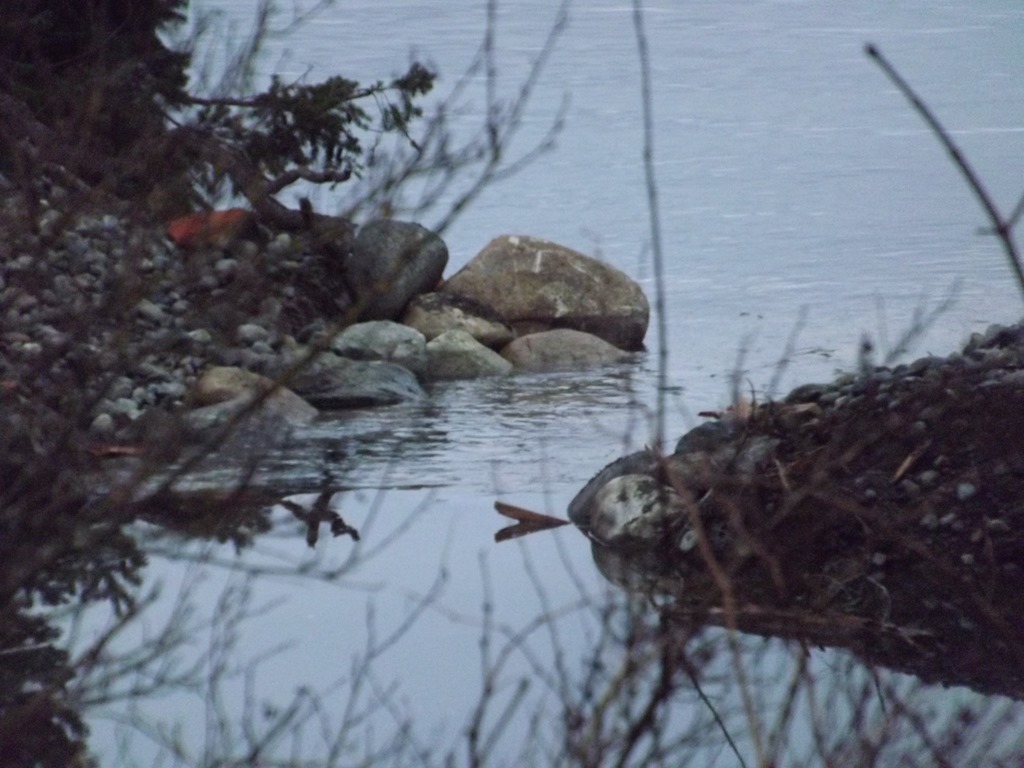
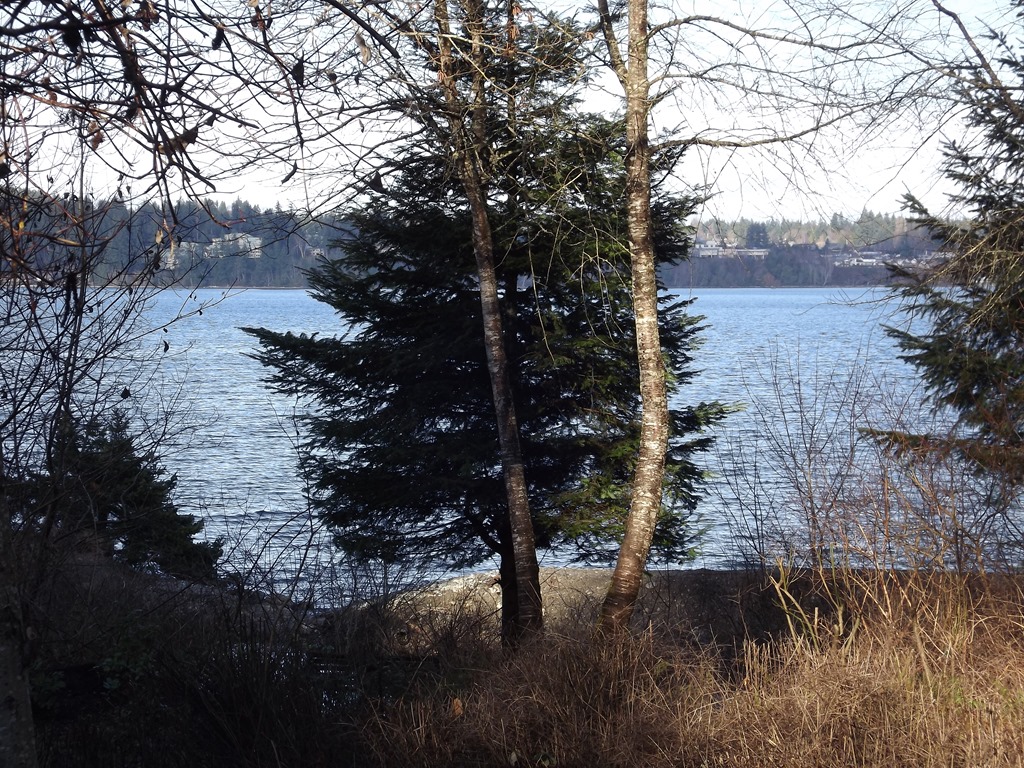
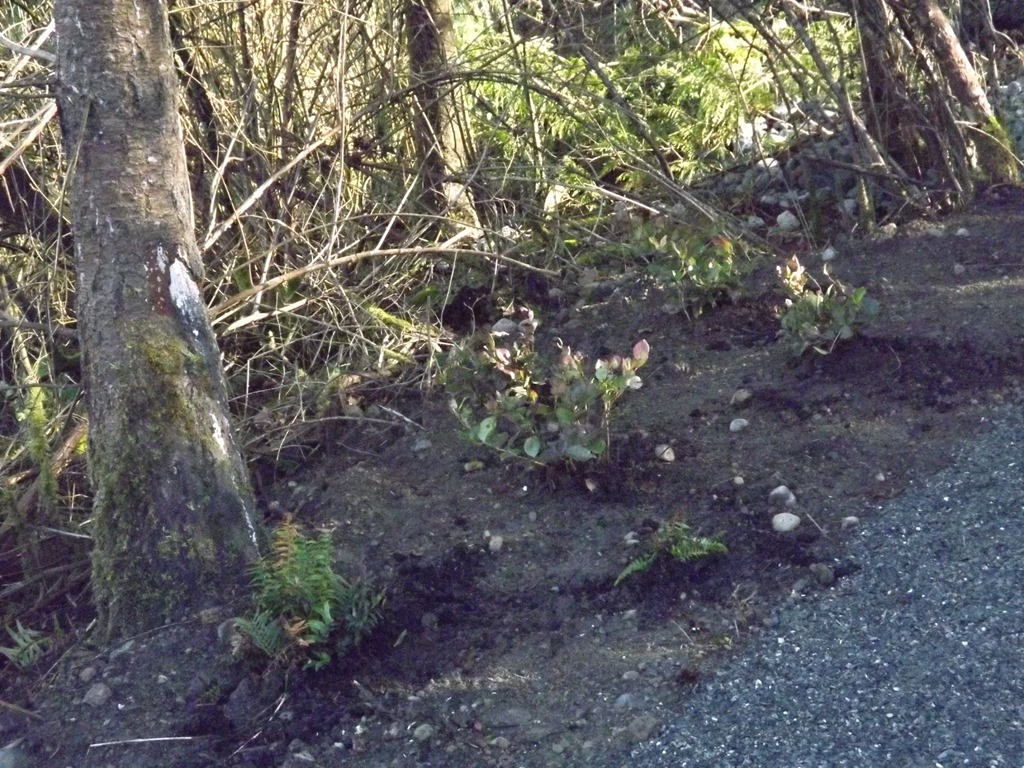
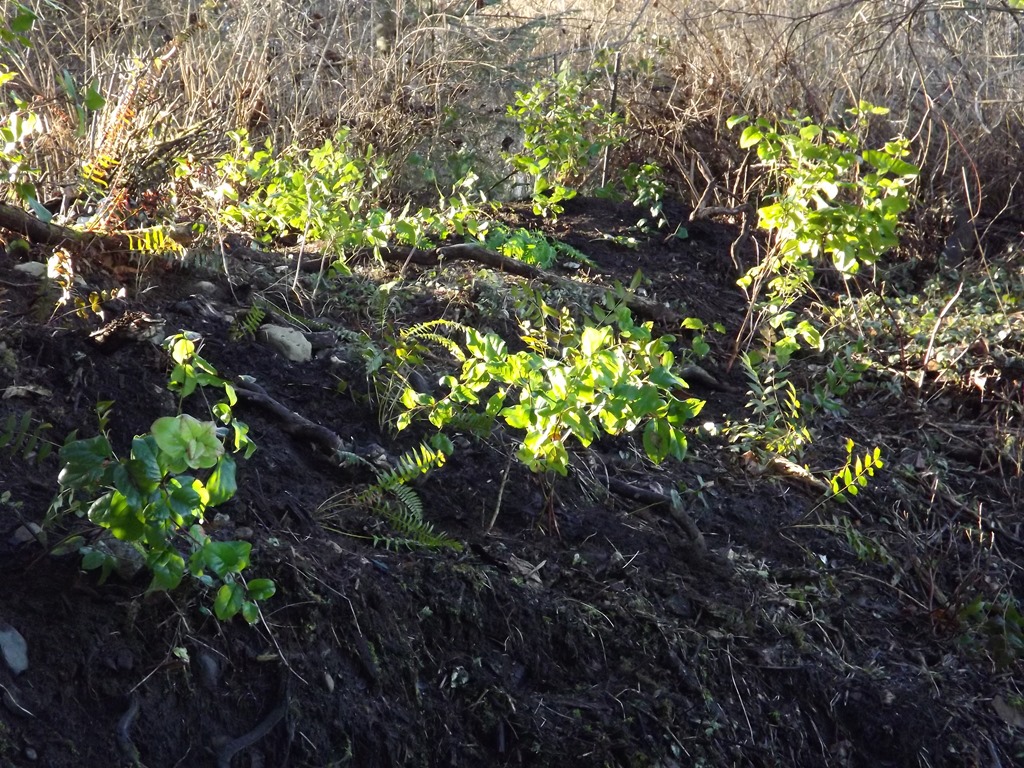
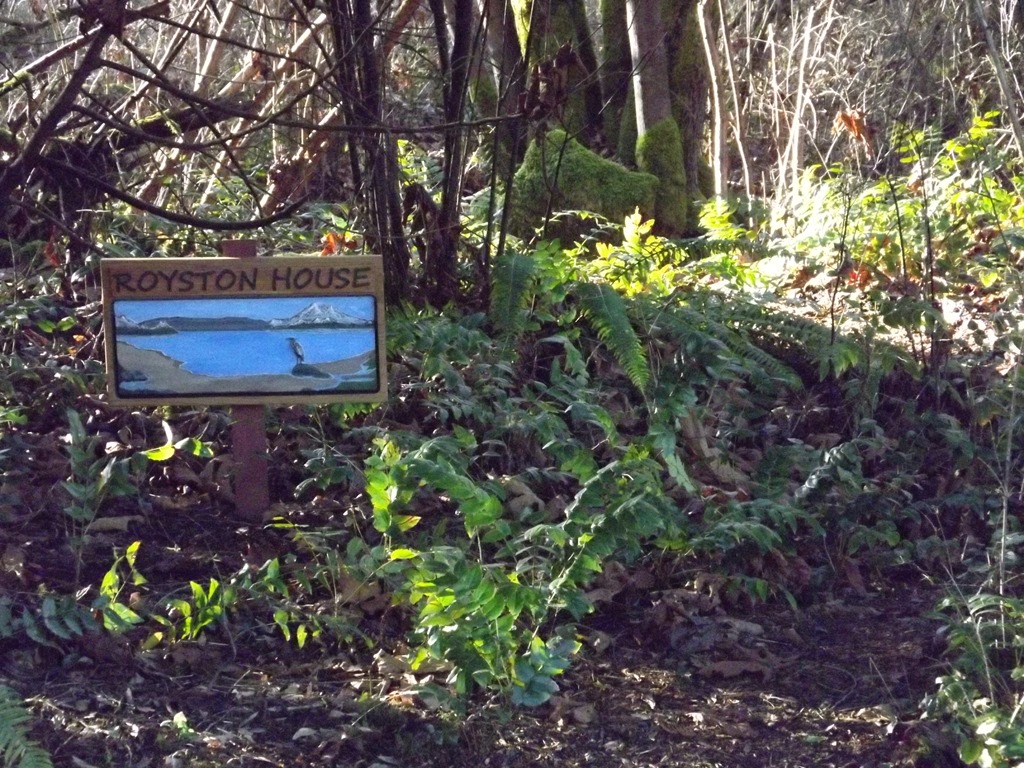
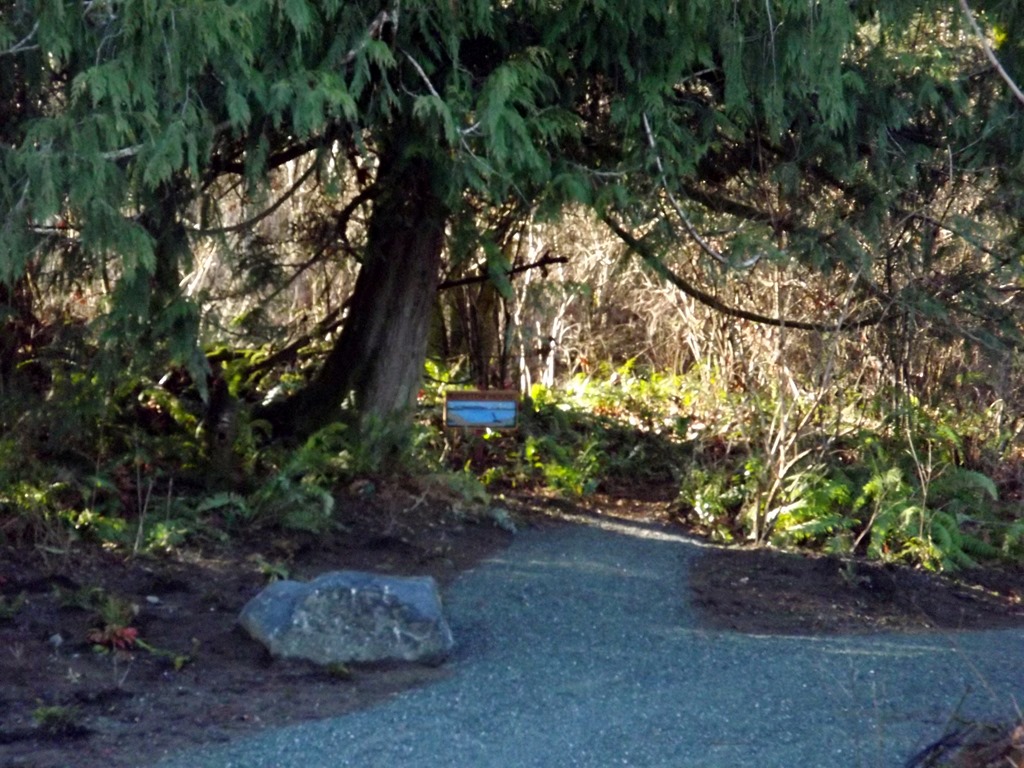
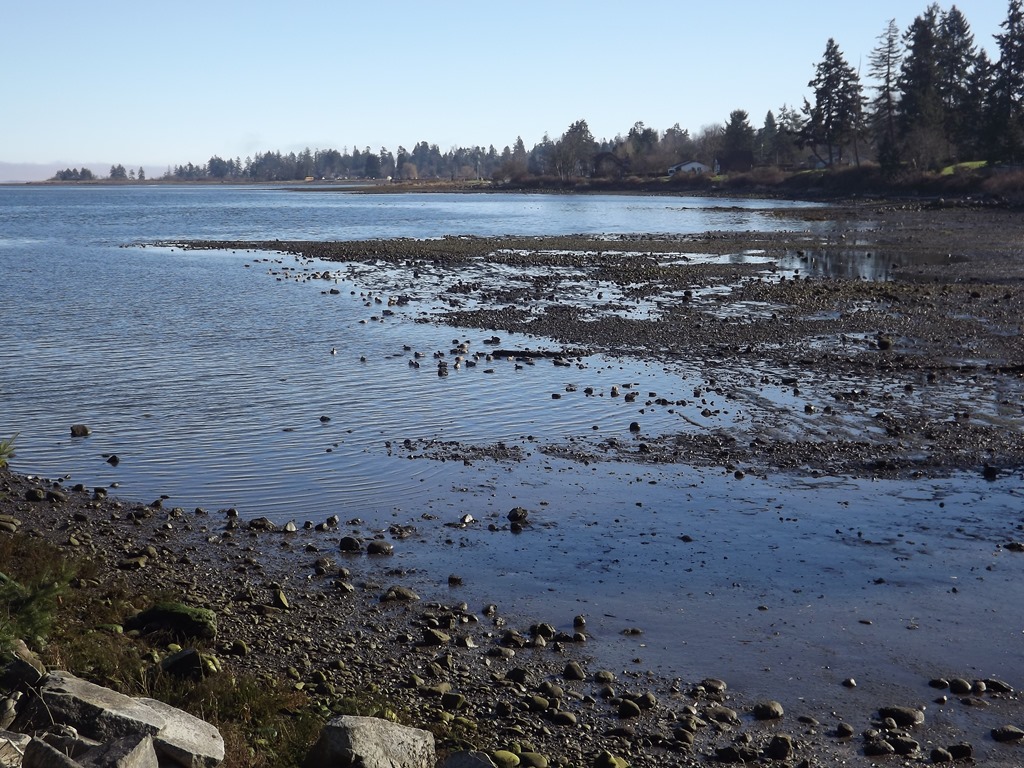
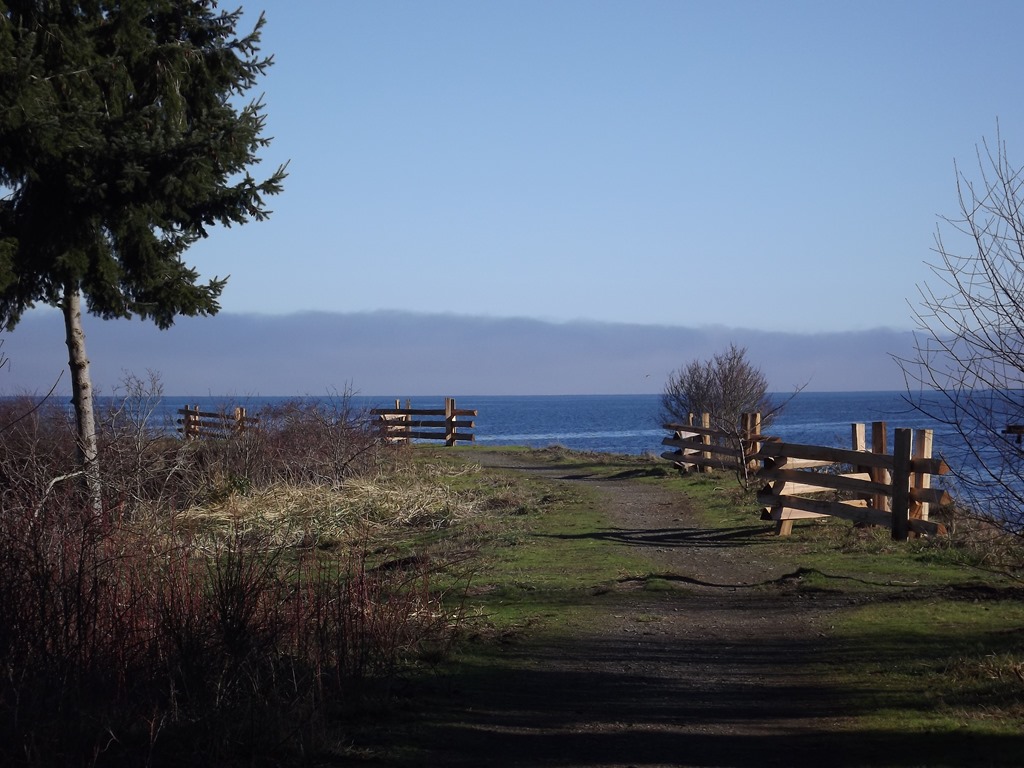
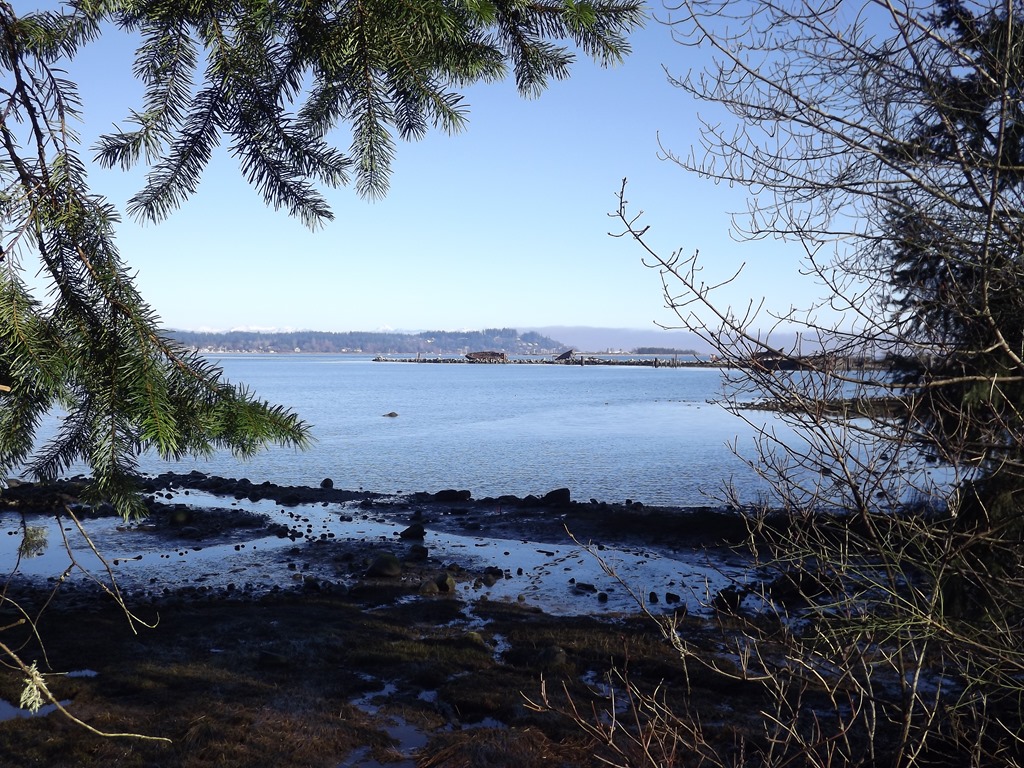
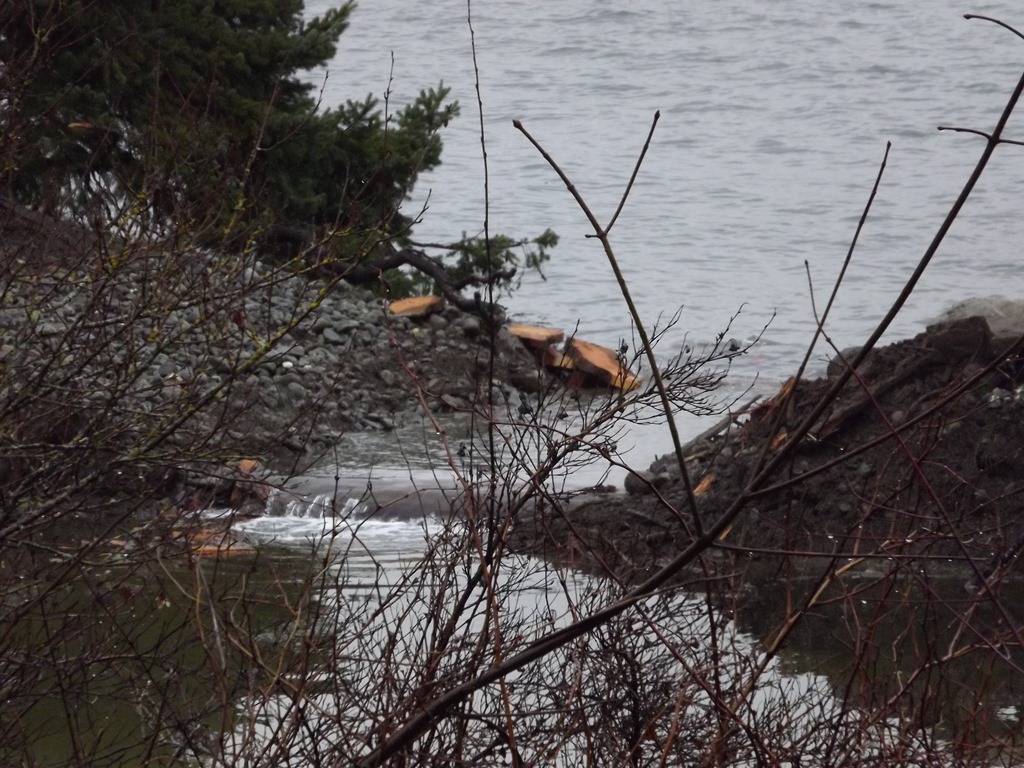
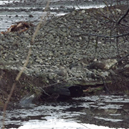
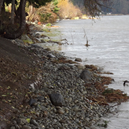
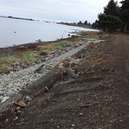
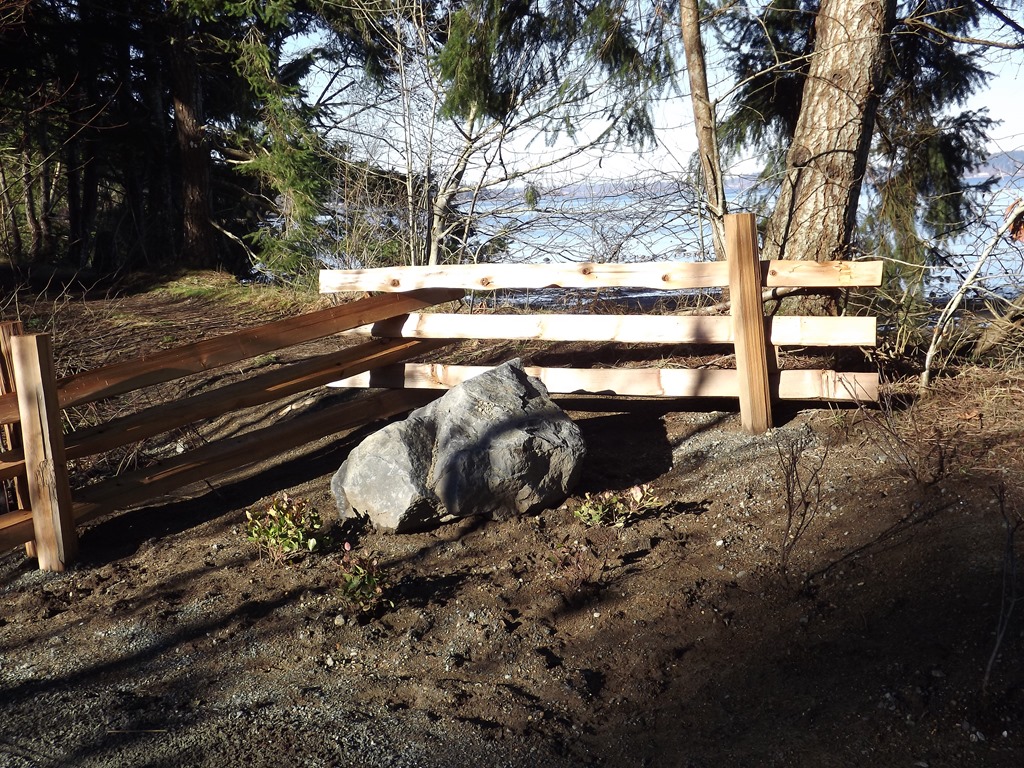
The Oceanside Trail in front of Royston House has been deteriorating significantly over the past two years. Formerly owned by the Comox Logging Railway it was originally constructed from crossed timbers with rock and gravel fill. Storms during high tides have done the damage now that the log booms in the Hilton rd harbor area are no longer there. The 15 sunken ships that provided a break wall along the south pier are slowly loosing to storms and salt water thus lessening their ability to protect the foreshore.
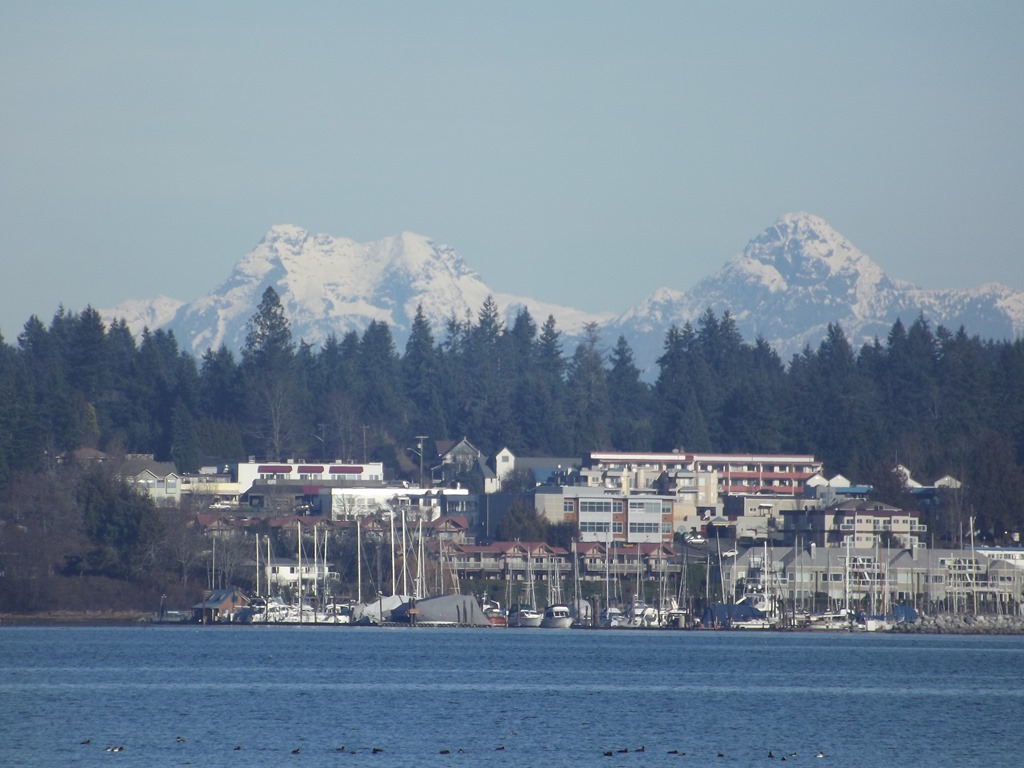
Restoring Green – This restoration of the trail system along the Courtenay Estuary will be a ‘Green Shores’ project which will enhance the natural habitat along the shoreline. The Hilton rd end will be added to the Comox Valley Parks with a picnic table outdoor area added. This restoration is in a two block stretch heading north between Hilton and Chinook Roads. Described by our local MLA Don McRae in his funding announcement as a ‘hidden gem’ of the Comox Valley. This favorite of Bird Watchers, Naturalists and Camera enthusiasts provides great views ever changing of the Courtenay Estuary, Comox Bay Ocean and the BC Mainland Mountains and will no doubt re emerge as a favorite of walkers, dog walkers and joggers as it once was.
Rhododendrons Feb 25 2012 - Moupinense and Cilpinense are two of the early spring favorites at Royston House B&B.
They are starting to bud out today in 7° celsius weather under clear skies and north outflow winds. Sometimes frost catches
Cilpinense if it buds out under a heavy frost so we will wait in anticipation. These Rhodos are equally attractive for their fuzzy foliage and multi pink flowers.
Mason Bees showed up in march 2005, five months after we finished our West Coast style timber frame house. The recycled douglas fir timber posts seemed just the perfect place for Mason Bees to build their house in our house.
These 12″ x 12″ timber posts form part of the house structure and were bolted to 1/4″ steel plate with just over 1/4″ opening above the steel plate. One day I spotted the Mason Bees working and after they had filled most of the slots I figured it was time to drill out a block of wood to start a Mason Bee colony.
The Mason Bees only filled about 15 holes in the wood block the first year but they were putting their eggs in other places too like the hole in the end of an extension cord.
The Mason Bee blocks are usually only made from dry fir but we also have used dry cedar, an old alder stump and professionally made wood Mason Bee houses that come apart in order to clean and separate the egg cocoons for cold storage.
Every year since 2005 we have added 1 or 2 houses. I now drill these with as many holes as possible by offsetting them so we now can add up to 500 bees each year in the new houses. We give away several bee houses each year to people who don’t have one. These houses may include some bees if the time is right to move them.
Part of the secret to having a good Mason Bee crop is to have a continuous flow of flowering plants from march until mid june.
Our houses are placed in sunny spots around protected areas (undercover) on the east, west and south sides. Some Mason Bee Houses are mounted on posts or walls with others just sitting on a cement patio.
This year we had our best apple crop ever, even with a near total absence of honey bees. Our blueberry crop was also excellent.
Thank you Mason Bees who number at least 2000 in the 11 houses now in operation at Royston House. If you thought about having Mason Bees but haven’t tried, maybe you already have them and don’t know it – that was us. We just had to provide the holes – around 1/4″ x 5 or 6″ deep and the Bees took charge.
Beautiful blue/black and about the size of flies ( watch out for what you swat) but much nicer with their midnight blue colours and they are no trouble to look after. You will really enjoy watching them work and they won’t mind.
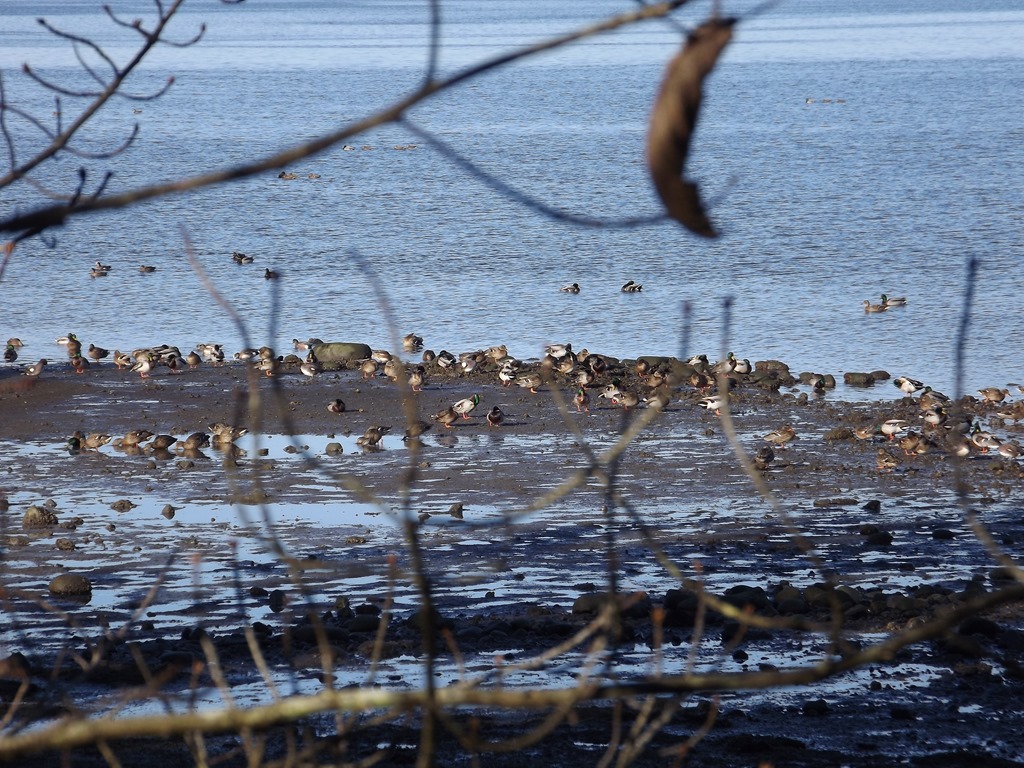
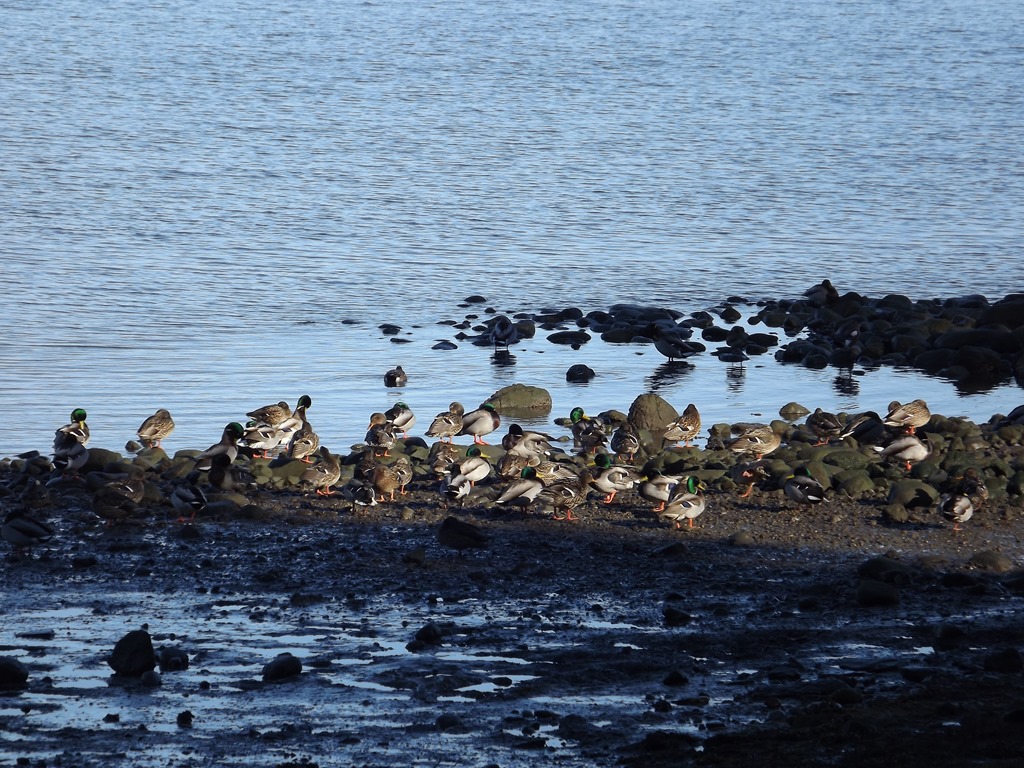
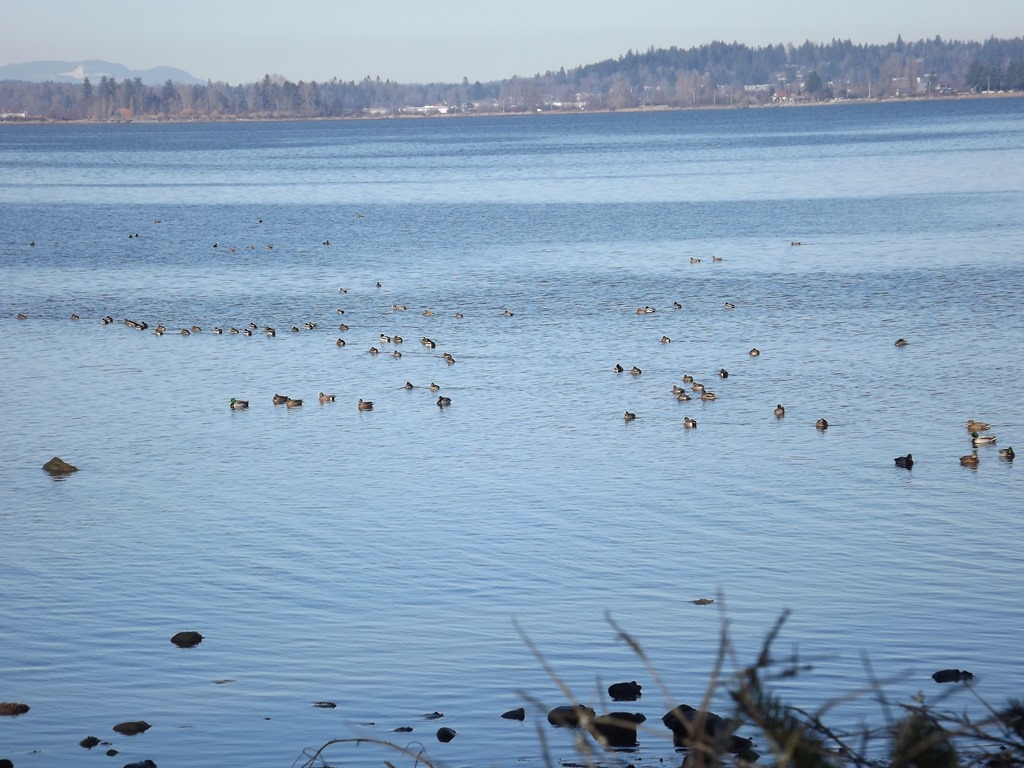
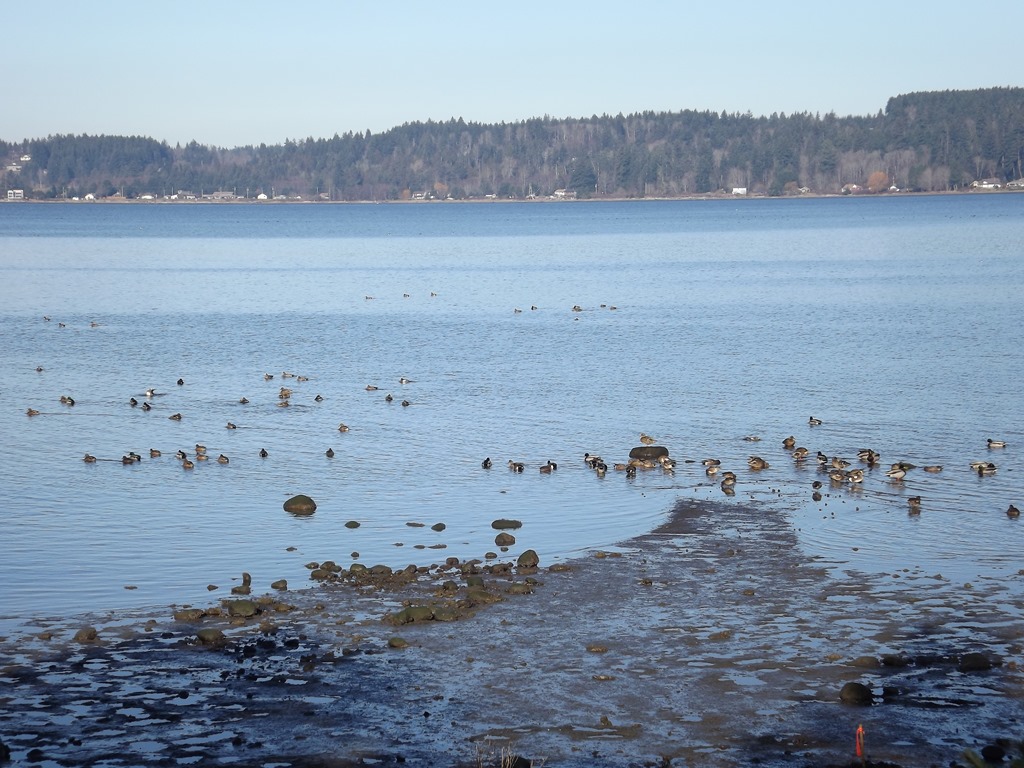
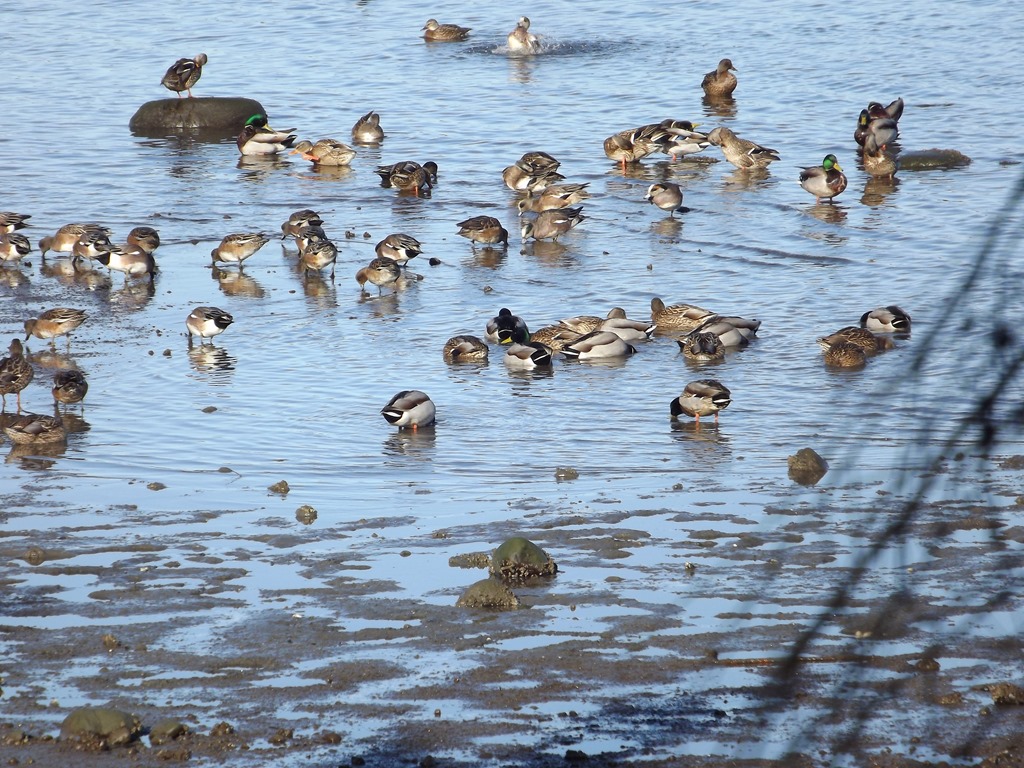
Today – Dec 4 – 2011. It’s like a Bird mini invasion at Royston House BB. Looking our our oceanside windows we see several Northern Flickers and Varied Thrush flitting back and forth between red-osier dogwood trees eating their delicious berries. Junkos and Towhees are working the ground, stirring up the leaves and scuffing around for some of the goodies there. Tree creepers and other small birds are grubbing the trees for whatever they can find. Our small red apples tree is loaded this year but as always we save it for the birds. These apples haven’t captured a lot of attention from the birds yet – probably waiting till the snow falls and when everything else is buried. Our Royston House Bed Breakfast is located on the Courtenay Estuary – one of the most important winter bird habitats in Canada so we get a lot of Bird action here. The estuary is currently loaded with ducks, wintering geese and one of north america’s largest populations of Trumpeter Swans plus all the usual shorebirds we see most of the year. The Birds were late this year – like the weather but when they arrived they did it like a storm.

Frost in the morning with snow and skiing on Mt Washington in the Comox Valley on Vancouver Island. The weather over the past few weeks has been ideal for Blueberry bed prep work. We have been removing wild grasses and weeds between our Blueberry rows and then moving soil from these valleys onto the Blueberry rows. This soil is then replaced with bark mulch.
We are fortunate here in the Comox Valley to be only 5 minutes from our source of Douglas Fir bark. The local pole yard peels off the bark from their future power poles. They double grind it which makes it very easy to spread. Fir bark is ideal for a Blueberry mulch – holds moisture – controls weeds and is a weed free medium – helps to keep feeder root areas of the Blueberries cooler in the hot summer months.
Prior to moving to Vancouver Island in 2001 we owned a 10 acre Certified Organic Blueberry Farm in the Fraser Valley on the British Columbia mainland. Our committment to growing organically continues here on Vancouver Island at Royston House. Ross also does free consulting for new and existing Organic Blueberry farms on the island.
It is really amazing how hardy Blueberry plants are. Our Blue Crop’s are sprouting new buds even in this frosty weather.
Like most Blueberry Foodies we really enjoy big,dark, tasty Blueberries. Breakfast this morning was great. We are still eating our Patriot Blueberries from early picking this summer. The other big ones we grow are Darrow and Chandler. Being close to derek’s Certified Organic Blueberry U_pick in Royston we usually manage to get in on his first pick of Duke’s.
Back to work in the Blueberry patch now as you probably noticed in the photo that I still have work to finish

With all the talk this fall about giant force fed pumpkins we felt our naturally grown big ‘King’ apple was worthy of attention.
The 3 King apple trees at Royston House BB were planted around 90 years ago as part of the Hilton Manor estate in Royston by the sea, British Columbia. One of our senior b&b guests this fall from Toronto, Ontario grew up in the Hilton Manor. She remembers as a young girl “climbing the big old apple trees”.
We purchased the undeveloped and park like Royston Oceanside property for Royston House in 2001 moving from the fraser valley bc where we had a certified organic blueberry farm.

Royston House BB King Apple